
Industrialised design to construct: operating model transformation
PROPERTY, INFRASTRUCTURE & CONSTRUCTION · OPERATING MODEL · TECHNOLOGY
The situation
A major diversified property group carried friction between its development arm and its in-house construction division. Group policy required development to build through the internal division, and development considered it too expensive against a field of smaller and international competitors. At the same time the market was shifting from traditional contracts toward lower-margin managing-contractor and construction-management work, and rising labour costs under existing enterprise agreements were adding productivity pressure. To protect group margins, the executive wanted the delivery business rebuilt from the ground up, and the ten to fifteen per cent build-cost reductions that modern manufacturing methods were starting to make possible.
Before
Fragmented and siloed
Four per cent average margin
Heavy support costs
Paper-based tracking
Frictional internal recharges
The work
Retained as lead strategic adviser, we designed an operating model transformation built to lift recurring annual EBIT by an estimated $71.6 million to $110.1 million. It ran across five strands:
Repositioned the technology base, phasing out low-value legacy capability and building a research function so the design department became a source of difference rather than overhead.
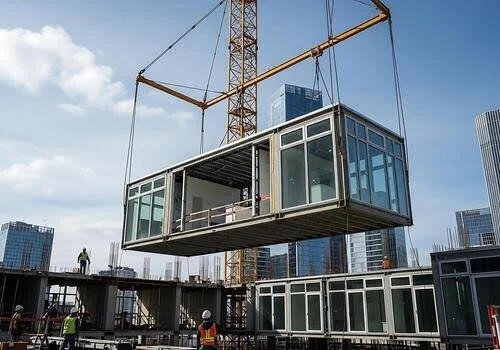
Designed a design, make, and construct platform to move the division off project-by-project delivery. Built on building-information modelling, it standardised repeatable building types and targeted a seven per cent margin against a four per cent baseline.
Built a digitised supply chain linked to the modelling data, so trade packages could be broken down, information routed automatically, and manual leakage removed.
Applied a blank-sheet review to head office and regional support, with a path to reduce gross overhead by thirty to forty per cent and replace it with a transparent cost-recovery model.
Set up a hub-and-spoke resourcing model for scarce engineering and project-management roles, so capability built locally could move to higher-value work, including offshore urban-regeneration projects.
After
Lean and integrated
Seven per cent target on design, make, construct
Thirty to forty per cent lower overhead
Modelling-led digital flow
Transparent cost recovery
The outcome
Organisational blueprints and an execution roadmap to deliver between $71.6 million and $110.1 million in recurring annual EBIT.
A path to reduce gross overhead by up to forty per cent, take four per cent out of direct project spend, and compress design-and-construct cycle times by around thirty per cent.
An internal procurement relationship that had been adversarial reset as an integrated one, with group projects delivered on cost and time.